Top Catalytic Converter Recycling Machines for Higher Platinum, Palladium & Rhodium Yield

Inside every scrapped catalytic converter sits a tiny fortune — a wash of platinum, palladium and rhodium spread across a honeycomb core no bigger than a fist. The metals are there. The question is how much of them actually makes it out.
That answer depends less on luck than on machinery. Between “converter in” and “PGM out”, a recycling line passes through four moments where value is either captured or quietly thrown away.
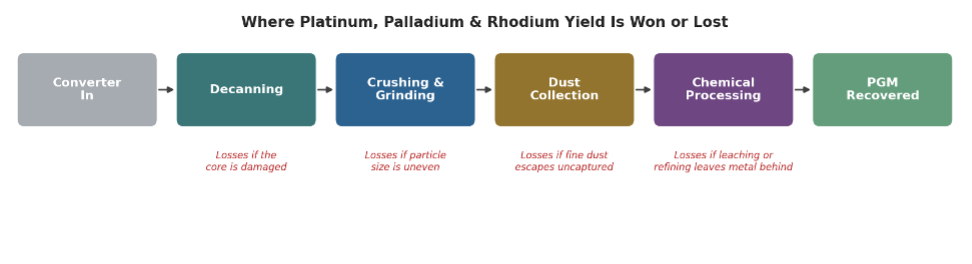
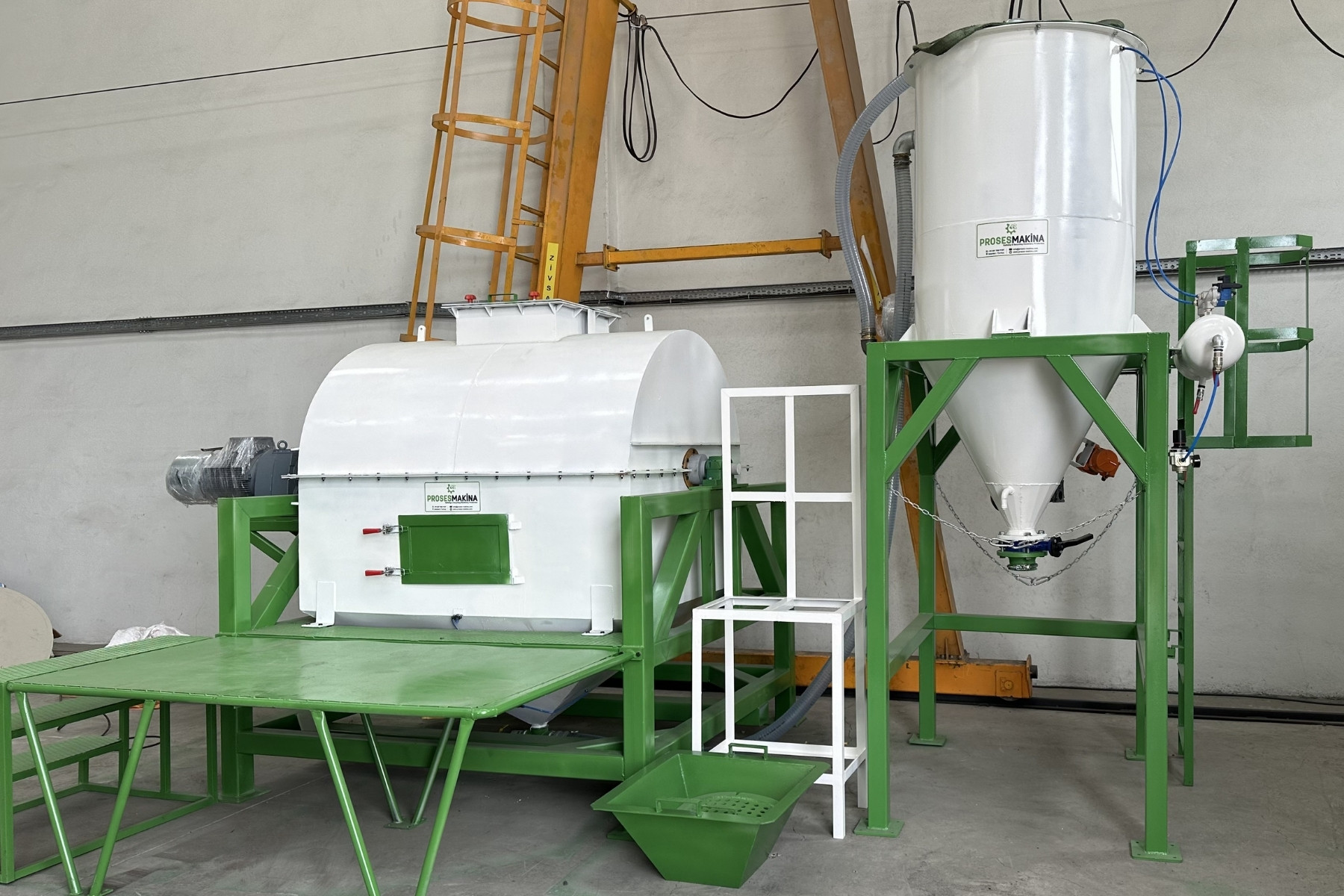
The first moment is the cut: A converter’s substrate is fragile, and it’s sealed inside a steel can that has to come off. Rush this step, or use a machine that isn’t built for precision, and fragments of the core go missing before the real recovery process has even begun. A well-built decanning machine treats this as what it is — not demolition, but surgery.
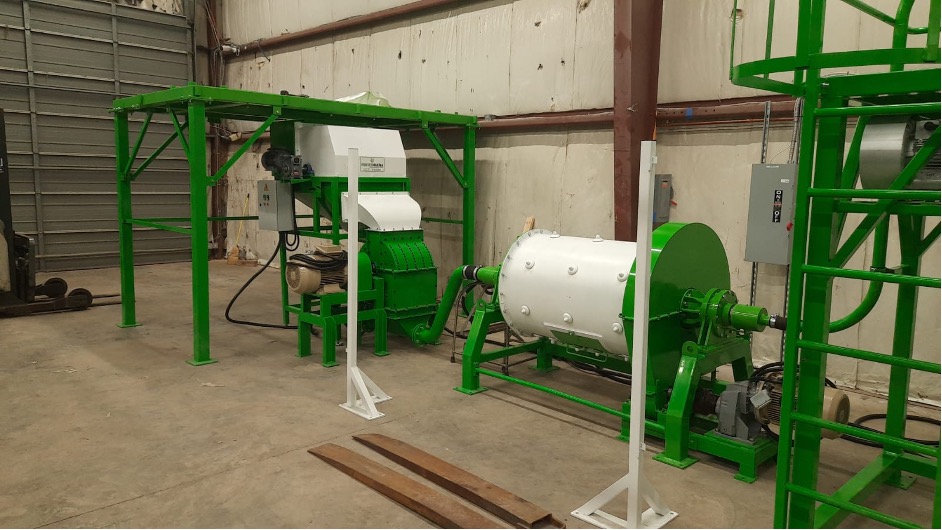
The second is the grind: Precious metal sits as a microscopically thin coating on that ceramic or metallic substrate, which means it can only be recovered as finely as the substrate is broken down. Coarse, inconsistent crushing leaves metal trapped inside chunks that never get exposed. This is where crushing and grinding mills earn their keep — the finer and more uniform the powder, the more surface area is handed over to smelting or leaching, and the higher the yield that comes back out.
The third, and most quietly costly, is the dust: Crushing throws fine particles into the air — and those particles are carrying PGM value with them. A recycling floor without serious filtration is, in effect, breathing out money. Strong dust collection systems catch what the eye never sees, turning what would be an invisible loss into recovered metal sitting in the collection bin.
The fourth is the chemistry: Even a perfectly ground powder still holds its platinum, palladium, and rhodium locked inside a matrix that has to be chemically opened up. This is where leaching and refining take over — dissolving the metals out of the powder, then separating each one from the others and from everything else in the mix. Rush this step, or run it with poor temperature and reaction control, and the powder can leave the line still carrying metal that was never pulled free.
None of these four stages works in isolation but together: A perfect crusher paired with weak dust collection is still bleeding yield. A great decanning machine feeding into a poor mill doesn’t solve the problem either — it just moves it one step downstream. And even flawless physical separation is wasted if the chemical stage can’t fully dissolve and separate what’s left in the powder.
| Stage | Main Risk If Poorly Equipped | What Our Equipment Delivers |
| Decanning | Core fragments lost or damaged during shell removal | Clean, complete separation of shell from substrate |
| Crushing & Grinding | Metal stays trapped in oversized, uneven fragments | Fine, consistent powder with maximum exposed surface |
| Dust Collection | Fine PGM-bearing particles escape into the air | Captured dust returned to the recoverable stream |
| Chemical Processing | Metal stays locked in the powder, or platinum, palladium and rhodium come out mixed together | Complete leaching and refining, with each metal recovered and purified on its own |
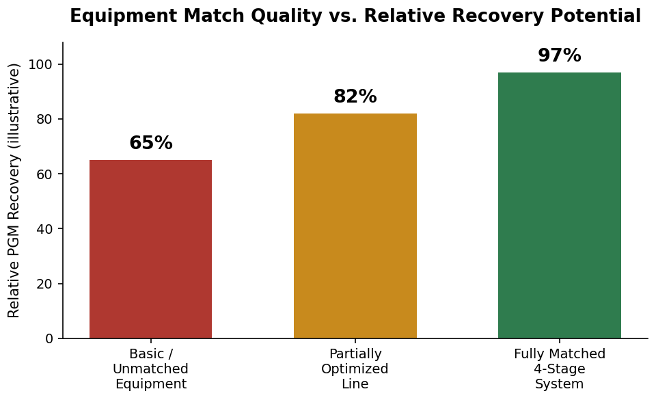
At Proses Makina, our catalytic converter recycling machines exist for one goal: recovering as much platinum, palladium, and rhodium as possible. The recyclers who consistently pull the most platinum, palladium, and rhodium out of their converters tend to have thought about all four stages as one system, not four separate purchases. There’s no universal “best machine” — the right setup depends on volume, on the refining process it feeds into and on the realities of the facility running it. But the principle holds everywhere; protect the core early, crush it fine and even, don’t let a single gram slip out as dust and fully dissolve and separate what’s left in the chemical stage. Get those four right, and the fortune hiding in every converter stops being theoretical.